Gyalo Thondup - A Life Dedicated to the Tibetan Struggle (1928–2024)
10 February 2025
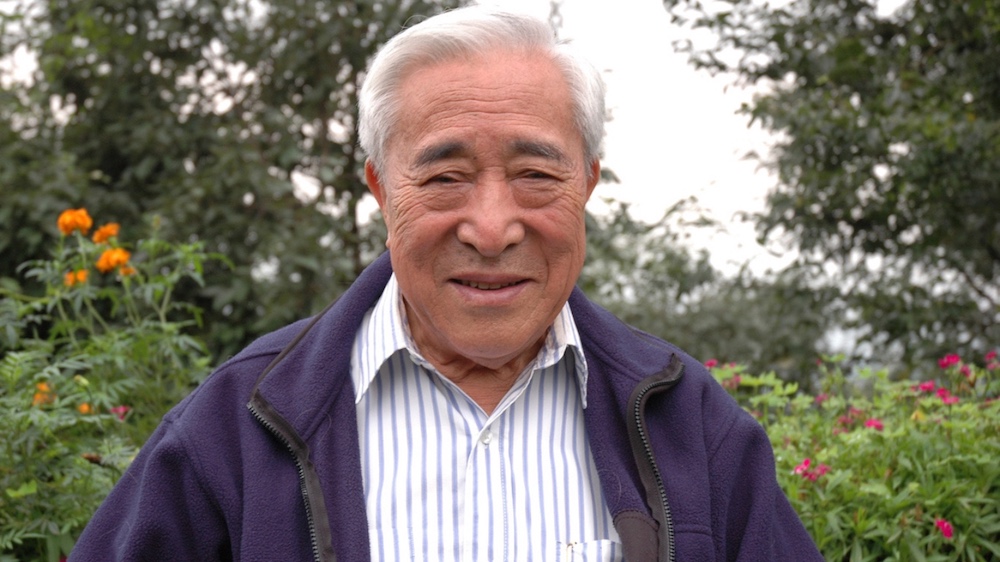
Tibetans around the world mourn the passing of Gyalo Thondup, whose extraordinary life reflected the indomitable spirit of the Tibetan people—a people who, despite decades of occupation and oppression, remain determined to fight for their rights, culture, and homeland. His dedication and efforts, whether through diplomacy, advocacy, or resistance, will forever remain an indispensable part of modern Tibetan history. Gyalo Thondup was a key figure in modern Tibetan history and the second oldest brother of the Dalai Lama. His passing on 8 February 2024 at the age of 97 at his home in Kalimpong, India, marks the end of an era—an era characterized by tireless advocacy, diplomacy, and resistance against the Chinese occupation of Tibet.
From Taktser to World Politics
Gyalo Thondup was born in 1928 in the small village of Taktser in Amdo, Eastern Tibet— the same birthplace as His Holiness the 14th Dalai Lama. As the only son in the family who was not destined for monastic life, he was groomed from a young age for a crucial role in Tibet’s future. During his education in China, he developed a deep understanding of Chinese political structures, even before the communist takeover in 1949—an experience that would later prove decisive for his strategy in the Tibetan struggle.
The Architect of International Advocacy
Gyalo Thondup dedicated his life entirely to the Tibetan cause. In a constantly changing geopolitical landscape, he held on to one goal: securing Tibet’s future. His early diplomatic efforts, particularly toward the United States and India, played a crucial role in mobilizing international support for the Tibetan resistance movement. As a key figure in bringing Tibet’s struggle to the international stage, he brought the issue to the attention of the United Nations, which led to three General Assembly resolutions in 1959, 1961, and 1965. In the 1950s, his work played a key role in a covert CIA operation supporting Tibetan resistance fighters who were battling the Chinese occupation forces. But as geopolitical relations shifted, so did his strategy. By the late 1970s, he no longer emphasized armed resistance but diplomacy, convinced that a lasting solution for Tibet could only be achieved through dialogue with Beijing.
A Controversial Diplomatic Role
In 1979, Gyalo Thondup had a historic meeting with Chinese leader Deng Xiaoping—the first official contact between Tibetan representatives and the Chinese government since the Dalai Lama’s exile. During this meeting, Deng spoke the momentous words: ‘Except for independence, all other issues can be resolved through negotiations.’ This statement laid the foundation for decades of Sino-Tibetan dialogues. As the Dalai Lama’s personal envoy, Thondup traveled repeatedly to China and Tibet to explore possibilities for reconciliation. His diplomatic approach, however, was received with mixed feelings within the Tibetan community. For some, it was a necessary step toward a peaceful solution, while others saw it as a compromise that endangered Tibetan independence. Despite setbacks, Thondup remained optimistic. When Chinese officials in 2008 attempted to deny Deng Xiaoping’s 1979 statement, Thondup spoke out publicly to refute this: ‘Deng Xiaoping said these words on 12 March 1979 directly to me: Except for independence, all other issues can be resolved through negotiations.‘
A Life of Service
Thondup’s dedication extended beyond diplomacy. Within the Tibetan government in exile, he played a direct role, being responsible for foreign affairs in the 1960s and becoming chairman of the Kashag (the Tibetan cabinet) in the early 1990s. From his bases in Hong Kong, Kalimpong, and Dharamsala, he remained tirelessly involved in the Tibetan political struggle. His deep conviction that dialogue with Beijing was inevitable stemmed from his realization that external support—even from India or the United States—alone would not be sufficient to resolve the Tibetan crisis. In 2008, he acknowledged: ‘Yes, the current dialogue since 2002 has produced no results, but even without tangible progress, we do not give up hope. The world is changing, China is changing. I am quite optimistic.‘
A Legacy of Determination
Gyalo Thondup’s legacy is one of unwavering dedication to Tibet. Lodi Gyari, the Dalai Lama’s special envoy, wrote in his memoirs: ‘It cannot be disputed that Gyalo Thondup dedicated his entire life to advancing Tibet’s interests. He worked with anyone who could contribute—whether it was the KMT, communists, Americans, Indians, or even the Russians—driven by a deep-rooted commitment to the Tibetan cause.’ Beyond politics, his most important contribution was perhaps his crucial role in the successful escape of the Dalai Lama to India in 1959—a moment that ensured the Tibetan struggle could continue beyond China’s grasp. He worked closely with Indian Prime Minister Jawaharlal Nehru and other world leaders to safeguard the Dalai Lama’s safety, an achievement he himself regarded as the most meaningful of his long life.
Thondup’s wife, Diki Dolkar (Zhu Dan), and daughter, Yangzom Doma, predeceased him. He is survived by his sons, Ngawang Tanpa Thondup and Khedroob Thondup, and their families. Among his surviving siblings are the Dalai Lama, Jetsun Pema, and Tendzin Choegyal. With his passing, Tibet loses one of its greatest champions, but his legacy lives on in the hope, determination, and indomitable struggle of the Tibetan people.