Joint letter to UNESCO on misrepresentation of Tibet as "Xizang"
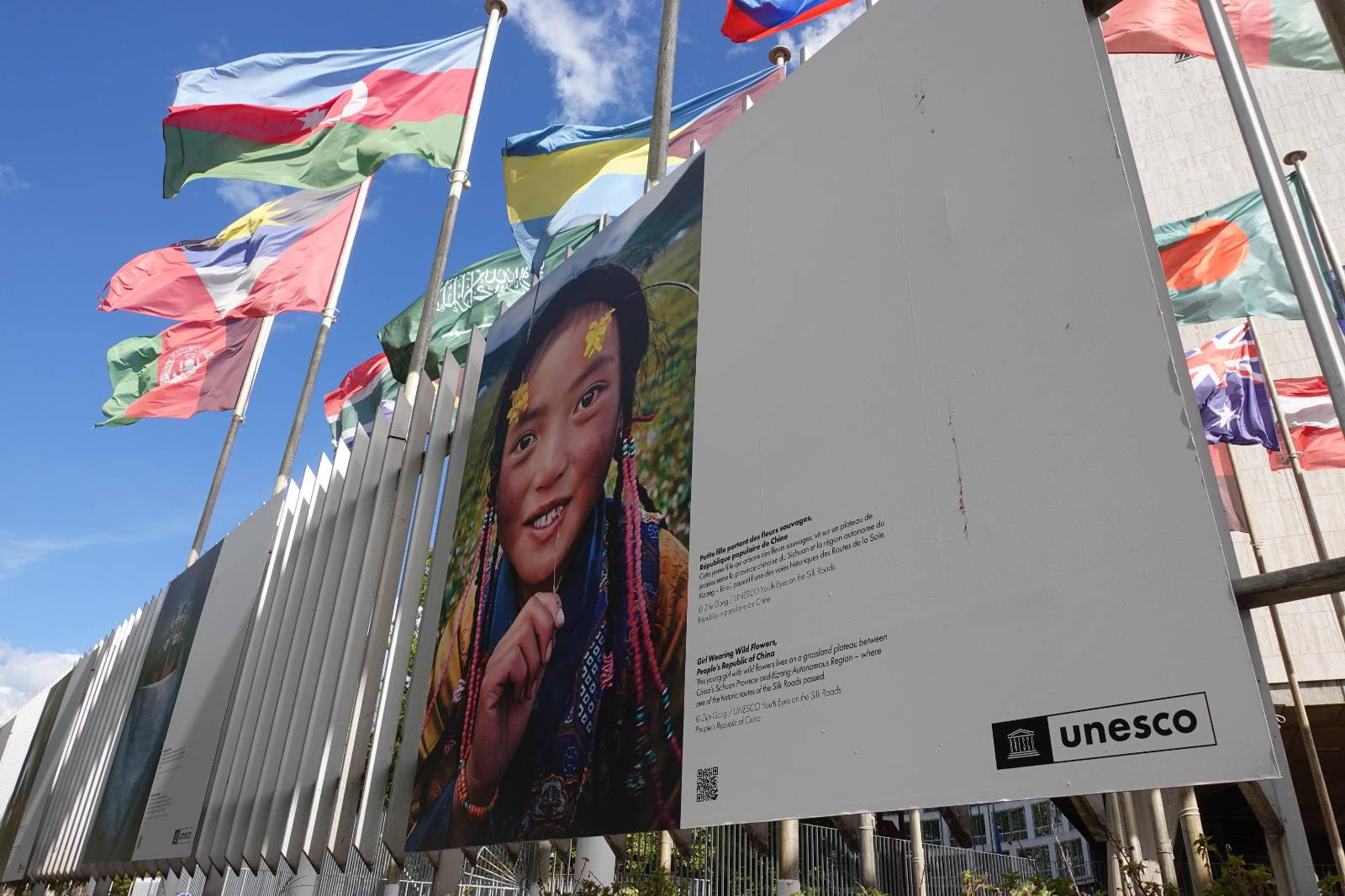 Photo of “Tibetan girl with wild flowers” incorrectly presented as “Young girl with wild flowers”
JOINT LETTER TO UNESCO
We, a global coalition of more than 140 Tibet-related organizations, write to you to formally protest a serious issue concerning a recent external communication.
We write to formally protest the use of the term “Xizang” in a UNESCO exhibition outside the headquarters in Paris. The public exhibition features a presentation board with an image titled “Young girl with wild flowers” with a caption reading: “This photo was taken in the grasslands between the Chinese province of Sichuan and the Xizang Autonomous Region.” This presentation contains two disturbing inaccuracies:
- The photo title has been altered from the original name, “Tibetan girl with wild flowers.”
- The caption incorrectly refers to Tibet as “Xizang.”
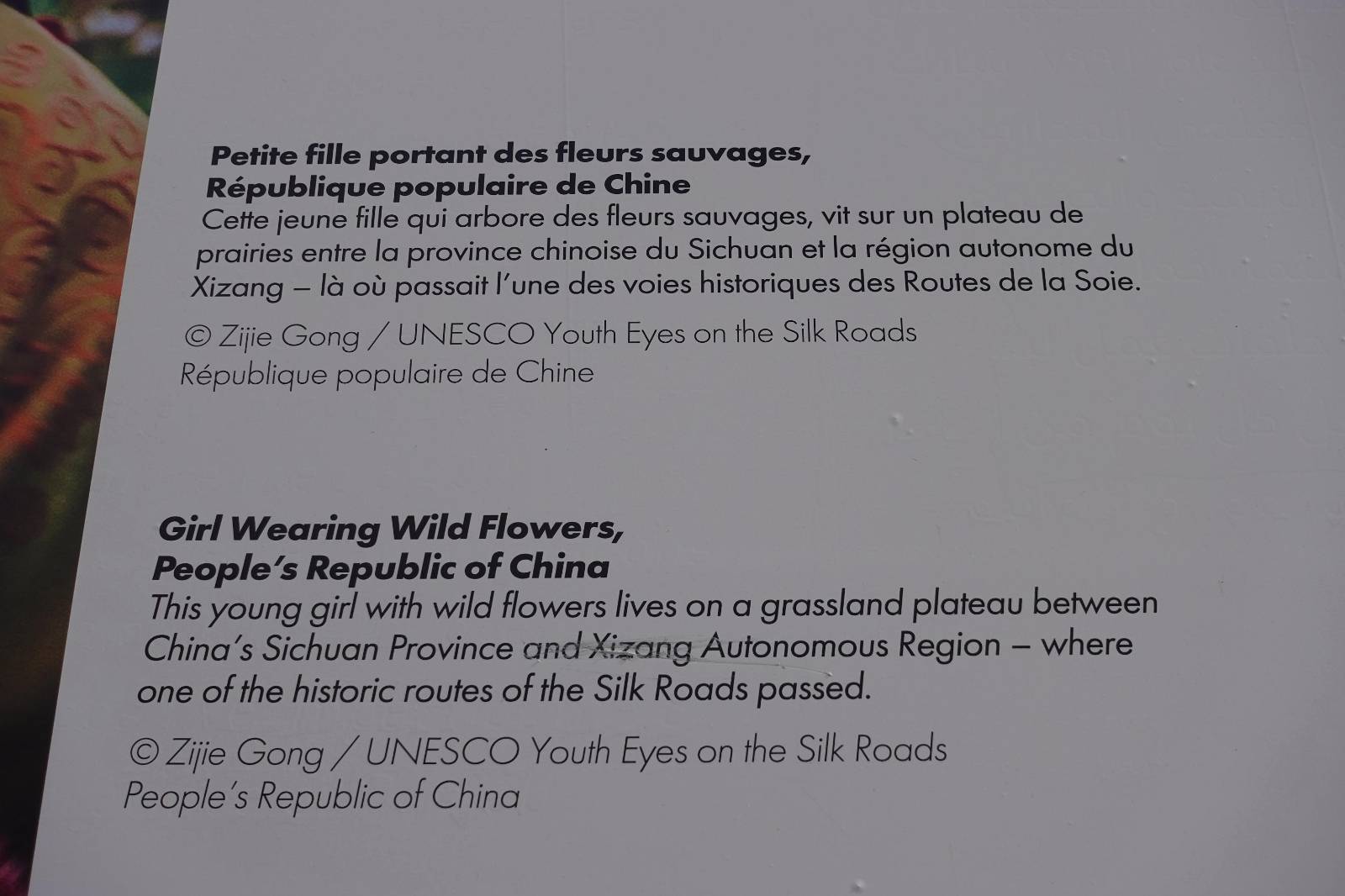 Museum card misrepresenting Tibet as Xizang
Xizang is not an internationally recognized designation; it is a highly politicized term that the occupying Chinese government is pressing the international community to adopt. As set out by the leading Tibetan professor Tsering Shakya who explains: “China’s demand that the international community adopt ‘Xizang’ mirrors colonial practices of renaming territories to assert dominance. By replacing local or widely recognized names with imperial names, colonial powers erased indigenous identities and histories.”
According to the Freedom House report of 2024, Tibet is the least free territory in the world, tied with Syria and South Sudan, with a score of 1 out of 100 for civil liberties and political rights. This reflects decades of repression that have resulted in the loss of all fundamental freedoms. China continues to implement a system of cultural genocide, making significant progress in its attempt to erase the Tibetan language, unique identity, and way of life.
Numerous UN experts and UN member states have sounded the alarm about ongoing programs in Tibet that are “designed to assimilate Tibetans into the majority Han culture, in violation of international human rights norms.” The artificial term “Xizang” is part of this broader colonial effort to erase Tibetan identity and history.
UNESCO, as a specialized agency of the United Nations, has a duty to preserve cultural heritage, including geographical names. According to principles adopted by the Economic and Social Council of the UN (ECOSOC), geographical names are more than just labels; they are living records of a people’s history, identity, and linguistic diversity. Preserving these names is essential for safeguarding the intangible cultural heritage of a community.
In a 2018 photo contest by UNESCO itself, the photo was correctly attributed as Tibetan girl with wild flowers - in the grasslands between Sichuan and Tibet.
By upholding the principles set out by ECOSOC, UNESCO plays a crucial role in ensuring that the geographical description of Tibet is protected as a fundamental act of respect for the identity of the Tibetan people and their right to maintain their historical and linguistic connection to their homeland.
We urge UNESCO to:
– Follow the example of its sister organizations and cease using the false term “Xizang.”
– Immediately remove the public image and display the correct title and caption in the museum to ensure the authenticity of Tibet’s geographical names.
– Be sensitive and alert to any attempt by the Chinese government to present Tibetan culture, including religion, language, history, and landscape, as an inherent part of what the Chinese government calls “Chinese culture.”
– Protect the right of Tibetan culture to self-determination and the right of the Tibetan people to enjoy their culture and their cultural rights.
We also request to meet with you and your advisors to discuss the essential need to preserve Tibetan culture, including terminology and language.