European Parliament speaks out sharply on Tibet in new China report
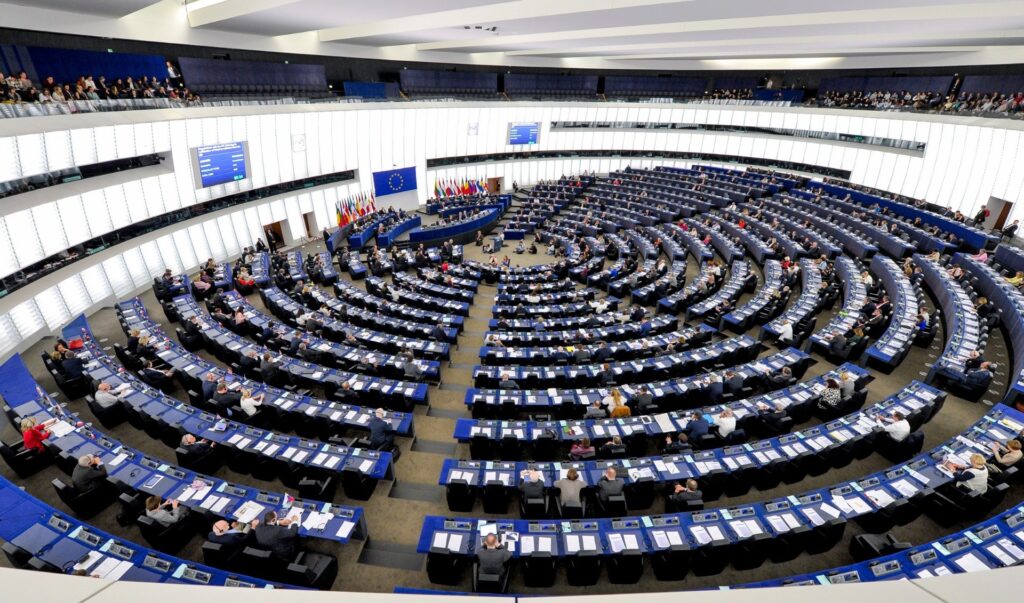
The European Parliament in Strasbourg, where the recommendation was adopted on 7 October. Photo: Central Tibetan Administration.
On 7 October 2026 in Strasbourg, the European Parliament adopted a recommendation concerning the political relations between the European Union and China. The document was adopted by 454 votes in favour, 86 against and 110 abstentions. The rapporteur was Belgian MEP Hilde Vautmans on behalf of Renew Europe.
The recommendation covers the full breadth of relations with China — trade, security, technology and human rights. What matters for Tibetans is that Tibet is named separately and explicitly in several places, rather than being absorbed into general language about human rights in China.
The full text is public and can be consulted directly: European Parliament recommendation of 7 October 2026 concerning EU-China political relations (PDF).
Boarding schools and forced assimilation
In paragraph (ao), Parliament expresses deep concern about “China’s systemic repression and forced assimilation policies in Tibet and Xinjiang”, including attempts at forced Sinicisation and the destruction of cultural heritage. In the same paragraph, Parliament demands “the immediate abolition of the state-run residential boarding school system for Tibetan children”.
Parliament also expresses explicit concern about China’s Law on Promoting Ethnic Unity and Progress, and about that law’s potential to further institutionalise assimilationist policies and undermine the linguistic, cultural and religious rights of ethnic minorities.
Interference in the Dalai Lama’s succession
In recital AJ, Parliament states that the Chinese authorities’ interference in the selection of the next Dalai Lama is “a politically calculated move” intended to undermine the legitimacy of Tibetan spiritual authority — and with it Tibetan culture and identity.
In paragraph (ar), Parliament asks after the whereabouts of the Panchen Lama. Gedhun Choekyi Nyima was taken away in 1995 at the age of six and has not been seen in public since.
Censorship around the August floods
Notable is paragraph (ap), which addresses the flash floods that struck the Nepal-Tibet border area on 26 August 2026. Parliament expresses regret that Chinese state media reported casualty and missing-person figures for the Tibetan side that are “markedly lower” than those cited by international human rights organisations.
Parliament further notes that eyewitness footage and survivor accounts have been removed from Chinese social media, that foreign journalists were granted only government-supervised access, and that China’s Ministry of Public Security has confirmed that individuals were penalised for sharing information about the disaster. Parliament calls on China to grant independent observers, journalists and humanitarian organisations immediate, unimpeded access and to publish full and verifiable casualty data.
What it means
A European Parliament recommendation is not binding on the Council, the Commission or the member states. Its significance lies elsewhere: the document puts on record what a large majority of Parliament considers to be the factual situation, and thereby creates a reference point that governments, diplomats and organisations can point to.
Representative Rigzin Genkhang of the Central Tibetan Administration responded appreciatively, saying the final document closely reflects the priorities put forward during the preparatory process.
That Tibet is given its own place in a broad China report — with concrete demands on boarding schools, religious succession and access to disaster areas — is a signal to Tibetans in exile that their situation has not dropped out of view at European level.
Support Tibet Support Group Netherlands in its struggle for justice and human rights in Tibet.
Sources
- European Parliament – Recommendation of 7 October 2026 concerning EU-China political relations (PDF)
- Central Tibetan Administration – The European Parliament's new China report rebukes Beijing over Tibet
- Tibet Support Groep Nederland – De Chinese Wet op de Etnische Eenheid (in Dutch)
- Tibet Support Group Netherlands – Panchen Lama missing for almost 31 years