China places military veterans in Tibetan schools and kindergartens
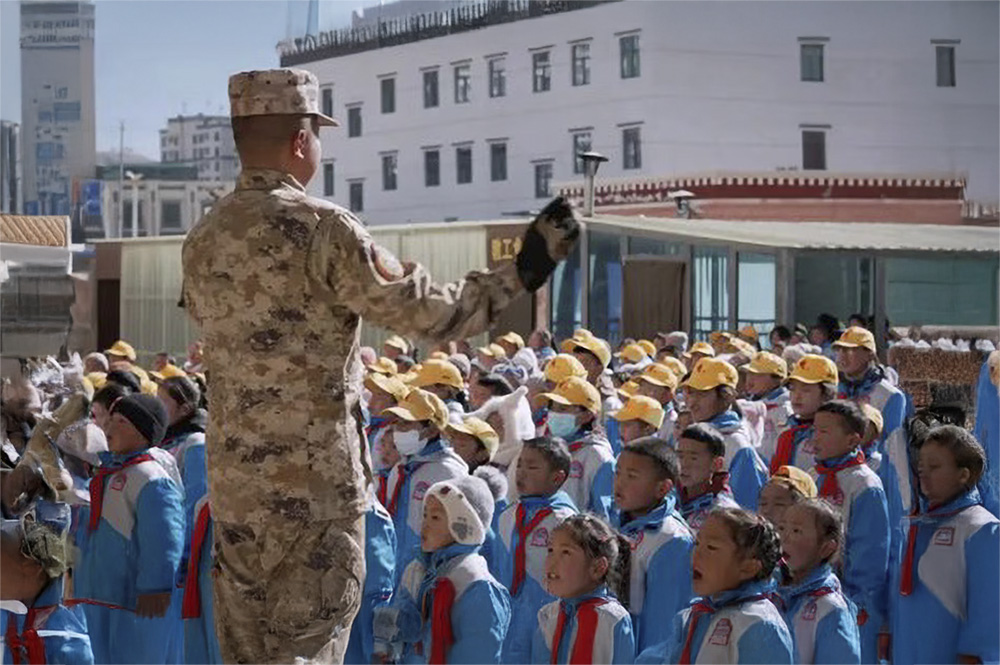 A Chinese army veteran instructing Tibetan schoolchildren in military discipline
Systematic militarization of Tibetan education
Chinese authorities have appointed 13 retired Han Chinese army veterans as “on-campus instructors” in seven schools and kindergartens in the Nagchu district of the Tibet Autonomous Region. This development marks a significant escalation in Beijing’s assimilation policy, exposing children as young as 4 years old to military training and Communist Party ideology.
The program, presented as part of the new National Defense Education Law of 2024, specifically aims to “plant seeds of love for the Party, love for the country, and guarding the border” in the minds of young Tibetan children.
Military indoctrination from kindergarten age
The veterans fulfill multiple roles within the schools: as national defense education advisors, behavioral standards instructors, and ideological and political teachers. State-controlled television broadcasts show Tibetan children in military uniforms marching, raising the Chinese flag, and standing in formation while responding to commands from the instructors.
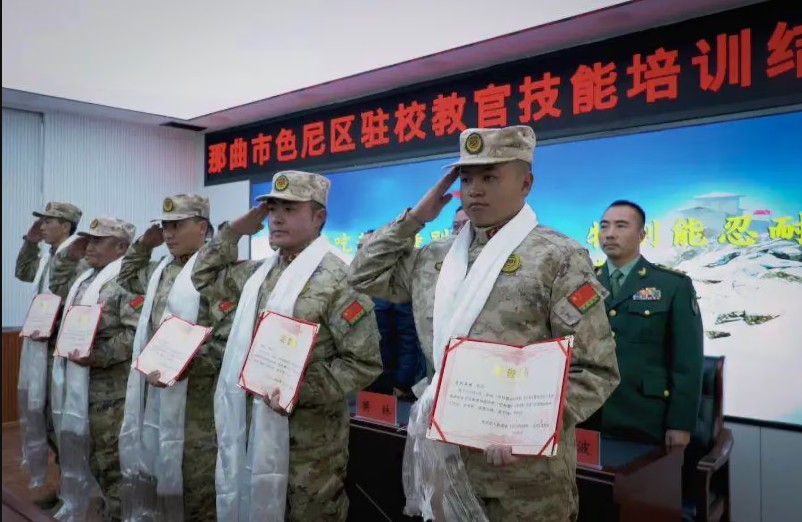 Tibetan schoolchildren in military uniforms during a training session led by Chinese veterans
Children participate in “civil defense” drills, including air raid shelter exercises where they duck under their desks and evacuate with notebooks above their heads for protection against falling objects. They listen to “red stories” glorifying the People’s Liberation Army and take oaths of loyalty to Xi Jinping and the Communist Party.
Broader context of cultural assimilation
This militarization of education takes place against the backdrop of a broader assimilation program. According to recent reports, nearly one million Tibetan children have been forcibly enrolled in state-run boarding schools where they are separated from their families and culture. The Tibet Action Institute warns that these schools “are not ordinary classrooms, but instruments of forced assimilation.”
The timing is no coincidence. In July 2024, Chinese authorities closed two monastic schools in Ngaba and Dzoge county in Sichuan province, forcing approximately 1,600 students to enroll in state-run boarding schools. This systematic approach points to a coordinated strategy to undermine Tibetan identity.
Strategic military considerations
Experts point to a dual agenda behind this program. Tibetans are physically adapted to high altitudes, making them valuable for military roles in mountainous terrain. The People’s Liberation Army aims to cultivate loyalty early to exploit this potential. Chinese state media celebrate the “success” of the pilot project in Nagchu, with reports that more than 300 Tibetan students have signed up as “future military service volunteers.”
Analysis of the implications
The placement of military veterans in Tibetan educational institutions represents a qualitative shift in China’s assimilation policy. This goes beyond language education or curriculum adjustments — it is a direct attempt to influence the psychological and cultural development of Tibetan children from their most formative years.
Tibet Watch rightly characterizes this program as a “systematic strategy of cultural assimilation” aimed at “erasing Tibetan identity.” The deployment of military personnel in kindergartens underscores the seriousness with which Beijing pursues this demographic and cultural transformation.
These developments require sustained international attention and documentation, as they touch on fundamental issues concerning children’s rights, cultural preservation, and the future of Tibetan identity under Chinese rule.
Sources
- China stations military veterans in schools and kindergartens in Tibet
- China deploys army veterans for military, political training in Tibetan schools
- How China Is Weaponizing Education to Erase Tibetan Identity
- When They Came to Take Our Children: China's Colonial Boarding Schools
- China opens boarding school in eastern Tibet amid assimilation concerns