Sentence of Tibetan environmental activist A-Nya Sengdra extended despite international pressure
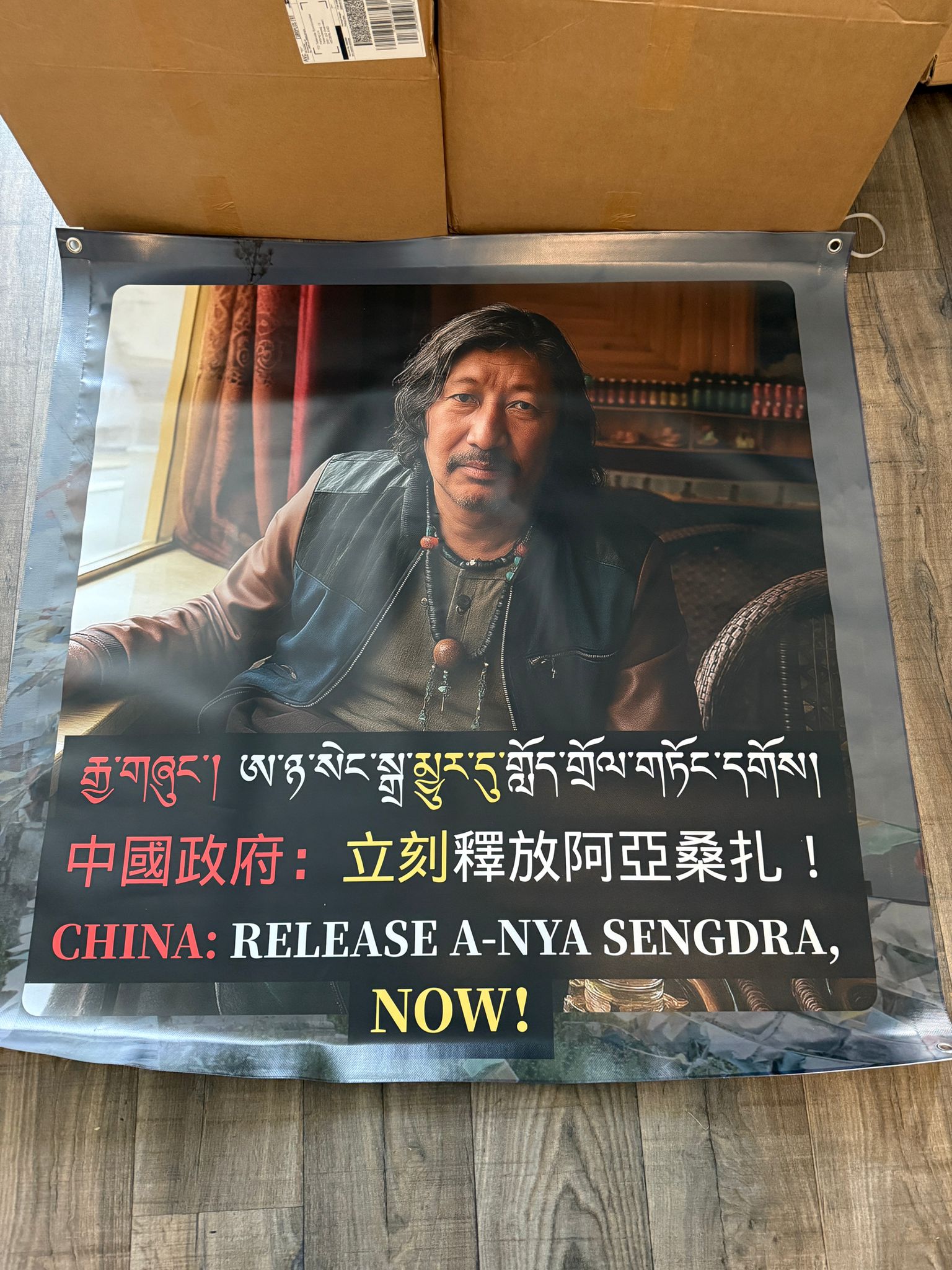
Sentence extension without clear grounds
Chinese authorities have extended the prison sentence of A-Nya Sengdra, a respected Tibetan community leader and environmental activist from the Golok region in eastern Tibet, to February 2026. The 48-year-old activist was initially due to be released on September 4, 2025 after serving a seven-year prison sentence, but faced new charges during his detention.
Sengdra was arrested in September 2018 by the Public Security Bureau of Gade County in Qinghai province. The authorities accused him of “gathering people to disturb public order” and “picking quarrels and provoking trouble” — standard charges that Chinese authorities use against Tibetan activists.
Campaigns against corruption and environmental crime
Before his arrest, A-Nya Sengdra was active as an anti-corruption and environmental activist. In 2014, he co-founded the volunteer organization “Mangdon Ling” (Forum for Public Affairs) together with other Tibetan nomads. The organization focused on combating abuse of power by local authorities, particularly the embezzlement of public funds intended for resettled nomads.
Sengdra successfully mobilized Tibetan nomads for campaigns against illegal mining activities and the hunting of endangered species. His work focused on protecting the fragile ecosystem of the Tibetan plateau against exploitation by Chinese companies operating with the tacit approval of local officials.
International condemnation remains without effect
In 2020, nine UN human rights experts, including the UN Working Group on Arbitrary Detention, called on Beijing to drop all charges against Sengdra. The experts warned that his imprisonment amounted to “criminalization of the legitimate work of a member of a minority group” and expressed serious concern about reports of deterioration in his physical and mental health.
Despite this international pressure, Chinese courts have rejected three formal requests for a retrial. Sengdra’s lawyer, Lin Qilei, was told not to come to court anymore for this case — a clear signal that the authorities leave no room for legal contestation.
Isolation and health problems
Sengdra has spent the majority of his detention in near-complete isolation. Family visits have been extremely limited. It was not until August 2025 that family members were allowed to visit him for the first time that year — the previous visit took place in 2024, the first time in six years. These meetings lasted only a few minutes.
Family members report a worrying decline in his health. During the rare visits, they describe him as weakened and vulnerable, indicating the heavy toll that years of isolation and poor detention conditions have taken.
Broader context of repression
The case of A-Nya Sengdra fits a broader pattern of Chinese repression of Tibetan community leaders and environmental activists. His lawyer argued that the case is part of a campaign in which Tibetan leaders are branded as “underworld forces” to suppress dissent.
In September 2025, 147 human rights organizations worldwide signed a declaration condemning China’s persecution of environmental and cultural defenders in Tibet. Demonstrations for Sengdra’s release took place in New York, Brussels, London, Amsterdam, Oslo, and Paris. For his courageous work, he received the Tenzin Delek Rinpoche Medal of Courage in 2022.
The extension of Sengdra’s sentence, despite international pressure and the lack of transparency about the new charges, illustrates the arbitrary nature of the Chinese legal system when it comes to Tibetan activists who stand up for their community and the environment.