Chinese Authorities Confiscate Dalai Lama Photos in Amdo
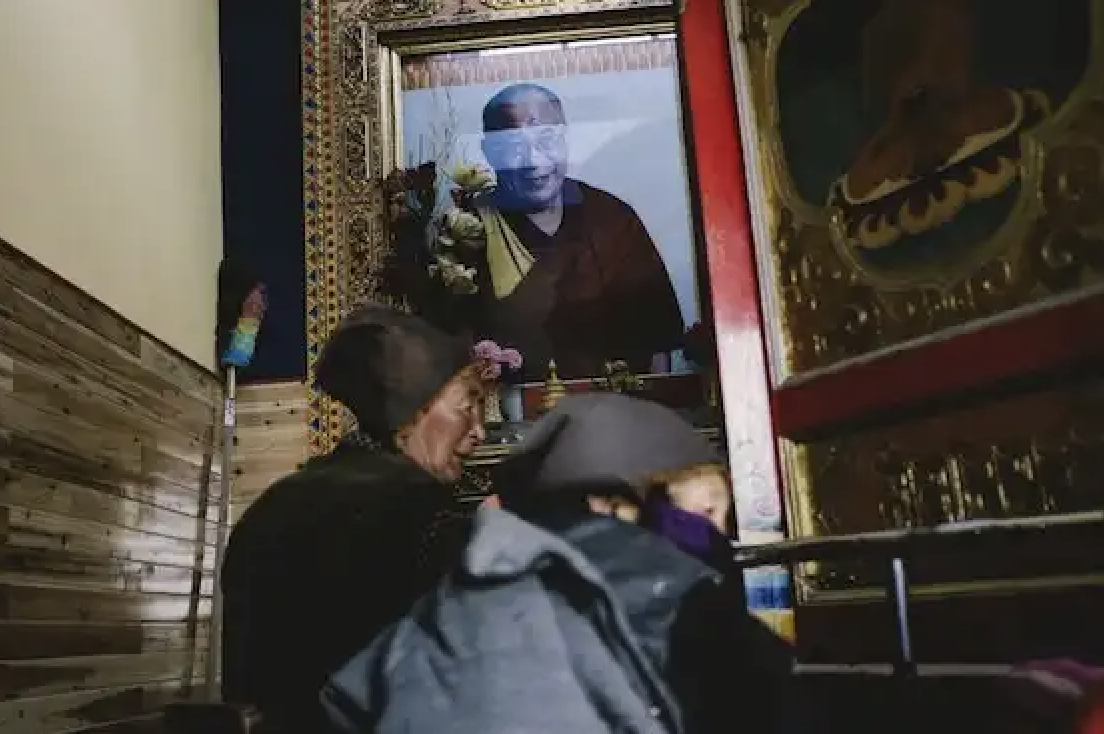
Portrait of H.H. the Dalai Lama at the Kirti Monastery in Ngaba, Amdo (Photo: AFP/Benjamin Haas)
Chinese authorities carried out large-scale raids on religious institutions and Tibetan households in Amdo, eastern Tibet, from 16 October 2025 onwards, forcibly confiscating photos of His Holiness the Dalai Lama.
Raids on Monastery and Villages
Three Tibetan officials, who stated they were acting under directives from the Chinese government and provincial authorities, conducted raids over four days at the Tashi Khyil monastery in Labrang and nearby villages, including Thangnag, Ngonchak, Ledruk, Sangkhok and Marteng.
The officials confiscated approximately four large bags filled with framed photos from monastic quarters and private homes. From the village of Marteng alone, four large bags of confiscated Dalai Lama photos were reportedly collected.
Legal Justification
The officials told the monks and villagers that keeping any photo of the Dalai Lama is illegal and that they were acting on orders from both local and central government authorities. Many felt intimidated and compelled to hand over the photos.
No known cases of physical violence, arrest or forced detention during the raids have been reported. However, contact with local sources was lost after 19 October, making verification of the ongoing situation impossible.
Tashi Khyil Monastery
Labrang Monastery, also known as Tashi Khyil, is one of the six great monasteries of the Gelug school of Tibetan Buddhism, founded by Je Lama Tsongkhapa. This historically largest monastery by monastic population outside the Tibet Autonomous Region is located in Labrang Town of Sangchu County, Kanlho (Gannan) Prefecture, in the traditional Tibetan province of Amdo.
Broader Context of Repression
This action reflects the established Chinese policy that criminalises veneration of the Dalai Lama under accusations such as “inciting separatism” or “endangering national security.” The possession of Dalai Lama photos is treated by Chinese authorities as a criminal offence.
Previous incidents follow a similar pattern. On 17 March 2021, authorities in the village of Zawonpo, Sershul County of Kardze, ordered every household to remove portraits of the Dalai Lama and replace them with images of Chinese leaders. Residents were also forced to sign a five-point pledge in which they promised not to possess, distribute or display “prohibited” portraits of the Dalai Lama.
Additionally, on 20 July 2025, Chinese authorities restricted the daily activities of monks after discovering photos of His Holiness the Dalai Lama in their rooms. They carried out daily raids in their quarters at the Tsang monastery in Ba County, disrupting their studies and religious practices.
Religious Freedom in Tibet
The systematic confiscation of religious images constitutes a violation of Tibetans’ freedom of religion and conscience. For Tibetan Buddhists, the Dalai Lama holds deep spiritual significance, and his image is traditionally treated with reverence in homes and monasteries.
The raids illustrate the ongoing tension between Chinese state control and Tibetan religious practices, as authorities exert increasing pressure on expressions of Tibetan identity and spirituality.
Sources
- Chinese authorities raid monasteries, homes in Amdo, confiscate Dalai Lama photos
- China Conducts Dalai Lama Pictures-raid at Top Monastery Outside Tibet Autonomous Region
- China conducts Dalai Lama pictures-raid at top monastery outside Tibet Autonomous Region
- Dalai Lama Photos Seized As China Step Ups Tibet Crackdown
- China's new assault on Tibetan faith: Dalai Lama's photos seized in sweeping raids