Tibetan activist dies after self-immolation outside UN headquarters in New York
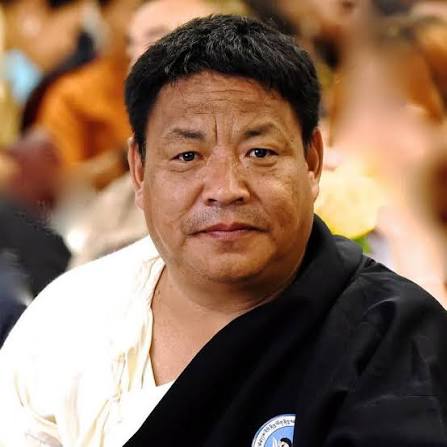 Lobga Rangzen (1974–2026), the 52-year-old Tibetan activist who died on 2 July 2026 after a self-immolation outside the headquarters of the United Nations in New York.
3 July 2026 — Tibet Support Group Netherlands
A Tibetan man died on the evening of Thursday 2 July after setting himself on fire outside the headquarters of the United Nations in New York. Tibetan media and community organisations identified him as Lobga Rangzen, a 52-year-old activist who had lived in the United States for around twenty years. He was severely injured and died a short time later at Bellevue Hospital.
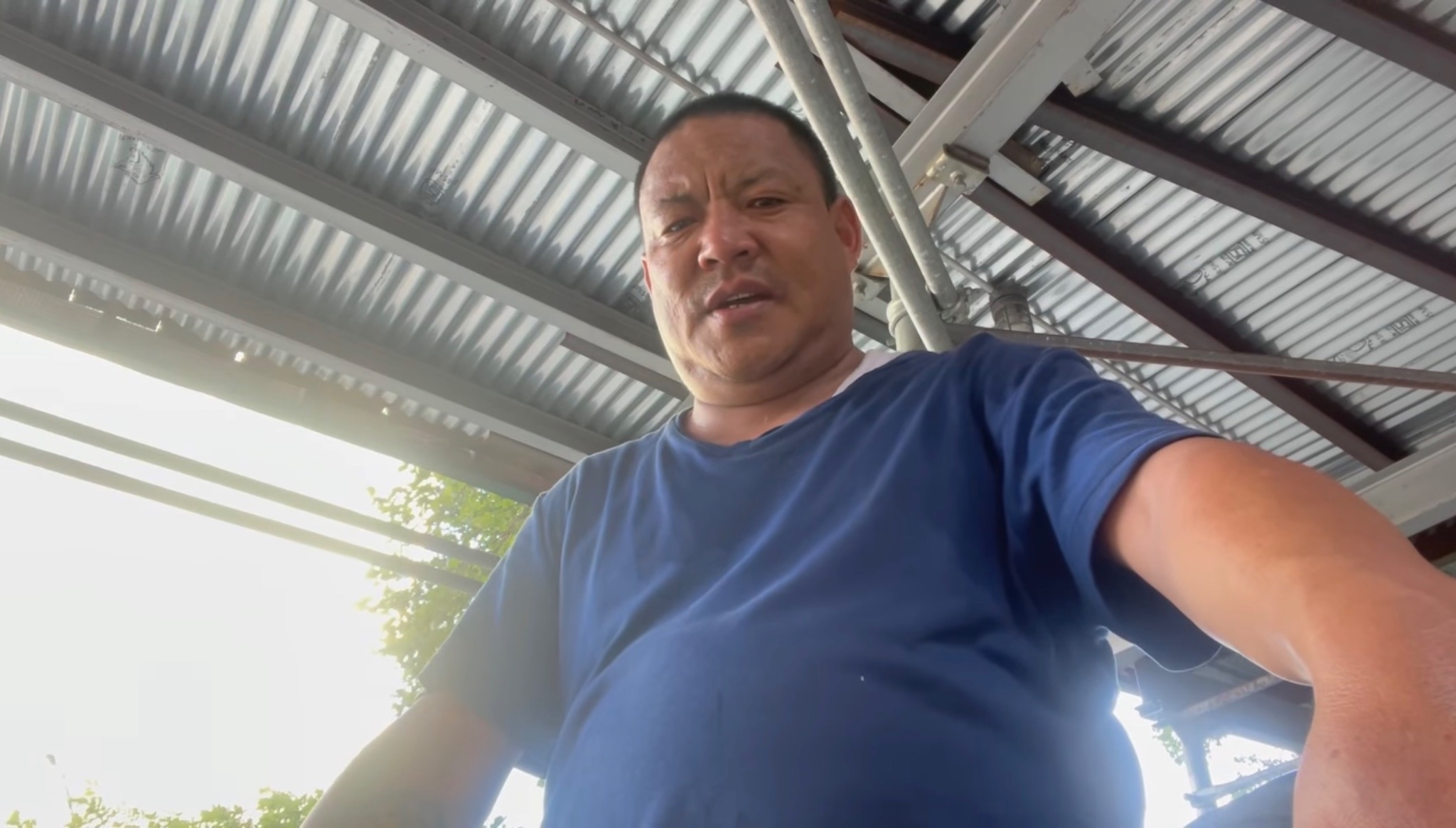
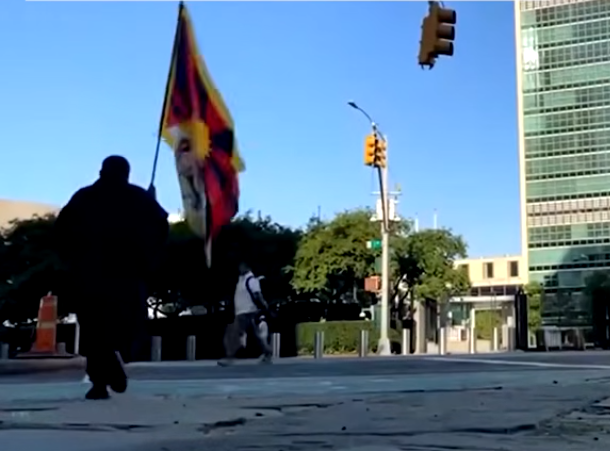
Shortly before his act, Rangzen made a call in a livestream for Tibetan independence and unity. According to Voice of Tibet, he warned that China’s policies threaten the survival of Tibetan identity, language and culture, and he called on Tibetans to unite. At the site of the protest, at East 43rd Street and First Avenue, he planted a Tibetan flag and handed out leaflets reading “China Out of Tibet”.
 Lobga Rangzen a few minutes before his protest, holding the Tibetan flag, outside the headquarters of the United Nations in New York.
When a people watches its identity crumble
To understand why a man of 52, with a life and a community in New York, is driven to this ultimate act, one has to look at what is happening in Tibet. Rangzen saw — as hundreds of thousands of Tibetans in exile do — how everything that defines his people is being systematically dismantled: the language disappearing from classrooms, the monasteries placed under state control, the children separated from their parents, the culture reduced to folklore. Self-immolation is not a political gesture like any other; it is what happens when people watch their culture and shared identity vanish before their eyes and every other avenue — petitions, demonstrations, appeals to the international community — runs aground on indifference.
Since 2009, according to the International Campaign for Tibet, 159 Tibetans inside Tibet have set themselves on fire; counting the self-immolations in exile, the total stands at 171. The ICT calls it “a profound cry of distress from people who see no other way to tell the world about their suffering”. China has not removed the causes of that despair, but has instead criminalised the despair itself: self-immolation, assisting in it, and even witnessing it are all punishable.
 Moments before his act, outside the doors of the United Nations.
A law with a racist core
Rangzen’s protest was directed explicitly against China’s new Law on the Promotion of Ethnic Unity and Progress. Behind that fine-sounding name lies an assimilation programme based on a simple and reprehensible premise: that the identity of the Han Chinese majority is the norm to which 55 ethnic minorities — Tibetans, Uyghurs, Mongols and others — must conform. Their languages, religions and cultures are not protected but subordinated to a state-constructed “shared national identity”, which in practice amounts to sinicisation.
This is not a policy of inclusiveness or integration; it is a hierarchy of cultures, enshrined in law. A state that decrees that the language, faith and identity of a people must give way to those of the dominant ethnic group is practising discrimination on ethnic grounds — and is thereby pursuing a policy that is racist at its core. The law codifies what has been practice in Tibet for years: Tibetan children placed en masse in state boarding schools, far from their parents, their language and their faith; monks and nuns subjected to “re-education”; and an all-pervasive surveillance that can brand any expression of Tibetan identity as “separatism”.
Human rights organisations have condemned the law as a direct threat to the survival of Tibetan identity. The United States, too, voiced its concern this week. And in the Netherlands there was resistance as well: on 1 July the Tibetan community, together with the Tibet Support Group Netherlands, demonstrated on Dam Square in Amsterdam against this law — one day before Rangzen gave his life in New York.
Viewer discretion advised: this image contains explicit imagery of the self-immolation.
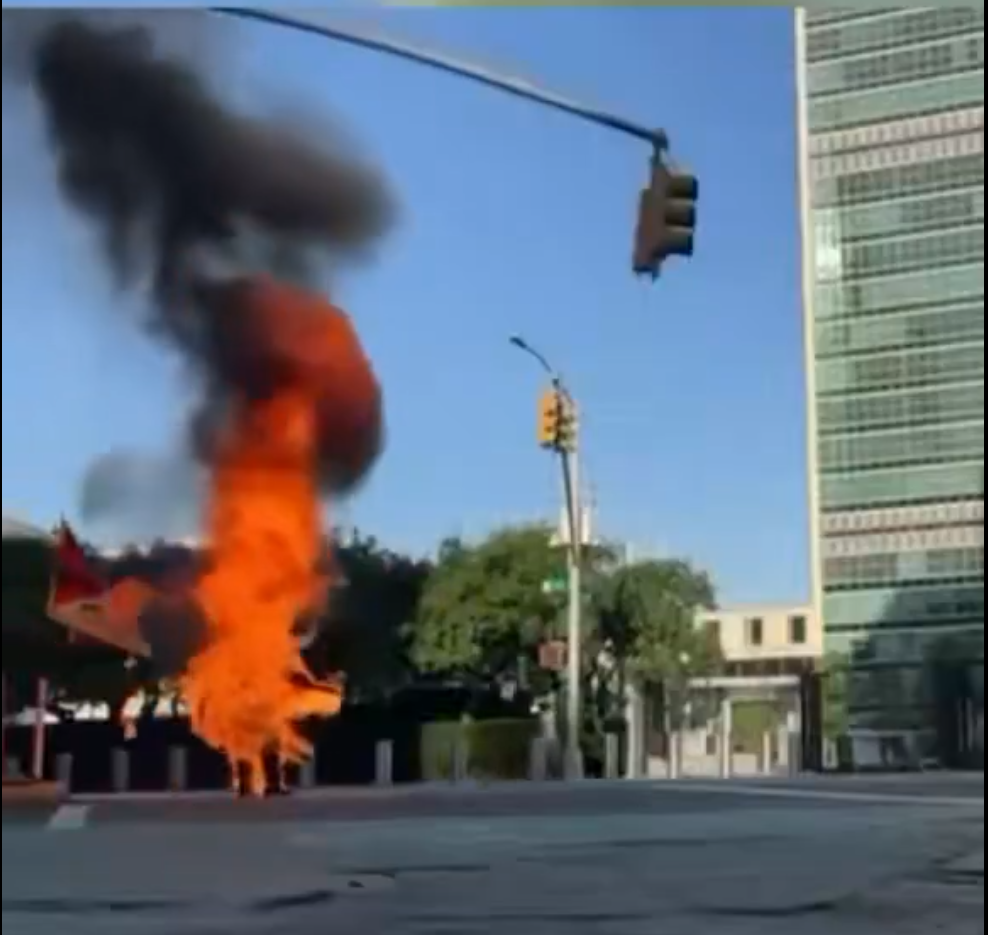
Lobga Rangzen’s protest outside the headquarters of the United Nations in New York, 2 July 2026.
When does silence become complicity?
The Tibet Support Group Netherlands is deeply shocked by this tragic loss. Our thoughts are with the family and friends of Lobga Rangzen and with the Tibetan community in New York and worldwide.
That a Tibetan should feel compelled in 2026 to this act — not in Tibet, but in the middle of New York, outside the doors of the United Nations, where China sits as a permanent member of the Security Council — forces an uncomfortable question: when does silence become complicity?
Not all silence weighs the same. A bystander without influence may stay silent out of ignorance or powerlessness. But those who maintain a transactional relationship with China — who trade, invest and profit from the cheap production this system yields — are in a different position. The Netherlands and the European Union are among China’s largest trading partners; they have access, influence and something to offer. If they nonetheless choose to raise human rights, at most, on the margins of trade missions, then that is not silence out of powerlessness, but silence out of interest: the choice not to burden the relationship with something that might harm the profits. Silence is not always complicity — but silence while profiting comes dangerously close to it.
The standard answer to this criticism has been the same for fifty years: it is being worked on, through “quiet diplomacy”. But that diplomacy has proved deafeningly quiet — and has demonstrably achieved nothing. No account is given of it, no result reported, no insight provided. A policy that evades all scrutiny and accountability is thereby just as opaque as the regime against which it is supposedly deployed. Quiet diplomacy that produces not a single measurable result over fifty years deserves no other name than what it is: an alibi for having to do nothing.
We call on the Dutch government, the European Union and the United Nations to name the forced assimilation of the Tibetan people for what it is, to hold China to account for it, and to attach concrete consequences to the continuation of this policy. The answer to the question of where silence turns into complicity is one they give themselves — through what they do now, or fail to do.
The Tibet Support Group Netherlands works for the rights, culture and political representation of the Tibetan people.
Sources
- Voice of Tibet – Tibetan man dies after self-immolation outside UN headquarters in New York
- International Campaign for Tibet – Self-immolations in Tibet
- International Campaign for Tibet – New PRC Ethnic Unity and Progress Law enforces assimilation of Tibetans
- Human Rights Watch – China: Boarding Schools Remould Tibetan Identity