Over 70 demonstrators at the Chinese embassy: Lobga Rangzen commemorated in The Hague
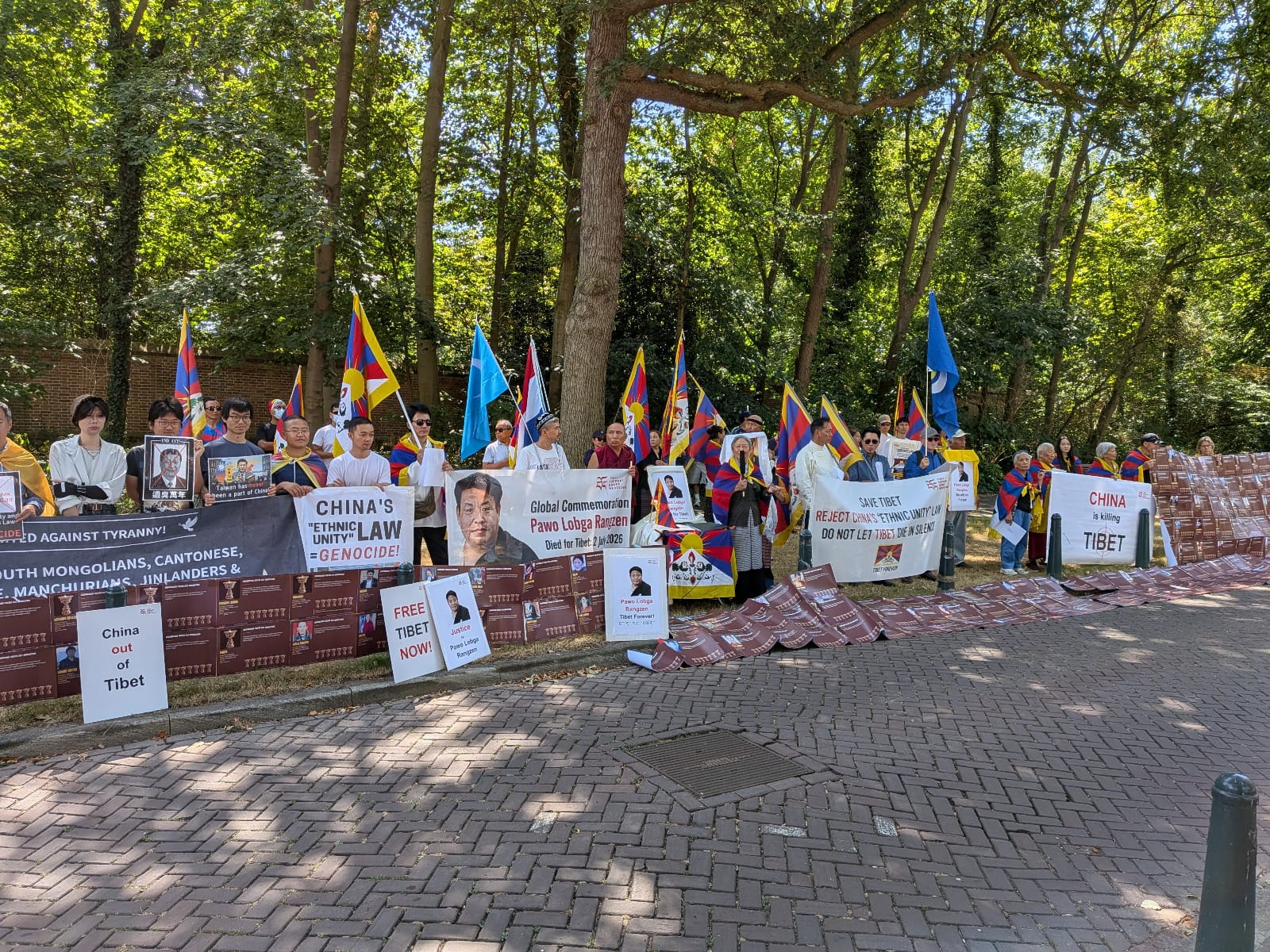
At the gate of the Chinese embassy in The Hague: over 70 people commemorate Pawo Lobga Rangzen — and reject the law against which he gave his life.
3 August 2026 — Tibet Support Group Netherlands
On Sunday 2 August, on the occasion of the Global Day of Action in memory of Pawo Lobga Rangzen, Tibet Support Group Netherlands organised a protest at the Chinese embassy in The Hague. Over seventy Tibetans, representatives of oppressed communities and supporters gathered on the Adriaan Goekooplaan — exactly one month after his death.
They honoured Lobga Rangzen, who on 2 July set himself on fire outside the headquarters of the United Nations in New York and died a short time later from his injuries. With his ultimate sacrifice he sought to wake the international community to the grave human rights situation in Tibet and to the acute threat facing the Tibetan people, their culture, language, religion and identity.
One day after the law
His courageous act took place just one day after China’s new Law on the Promotion of Ethnic Unity and Progress came into force. Rather than promoting genuine unity, this law reinforces the policy of forced assimilation that affects Tibetans, Uyghurs, Southern Mongolians, Hong Kongers and other peoples under Chinese rule. What was previously policy is now law: anyone holding on to their own language, faith or history now deviates from what the state has fixed as the norm.
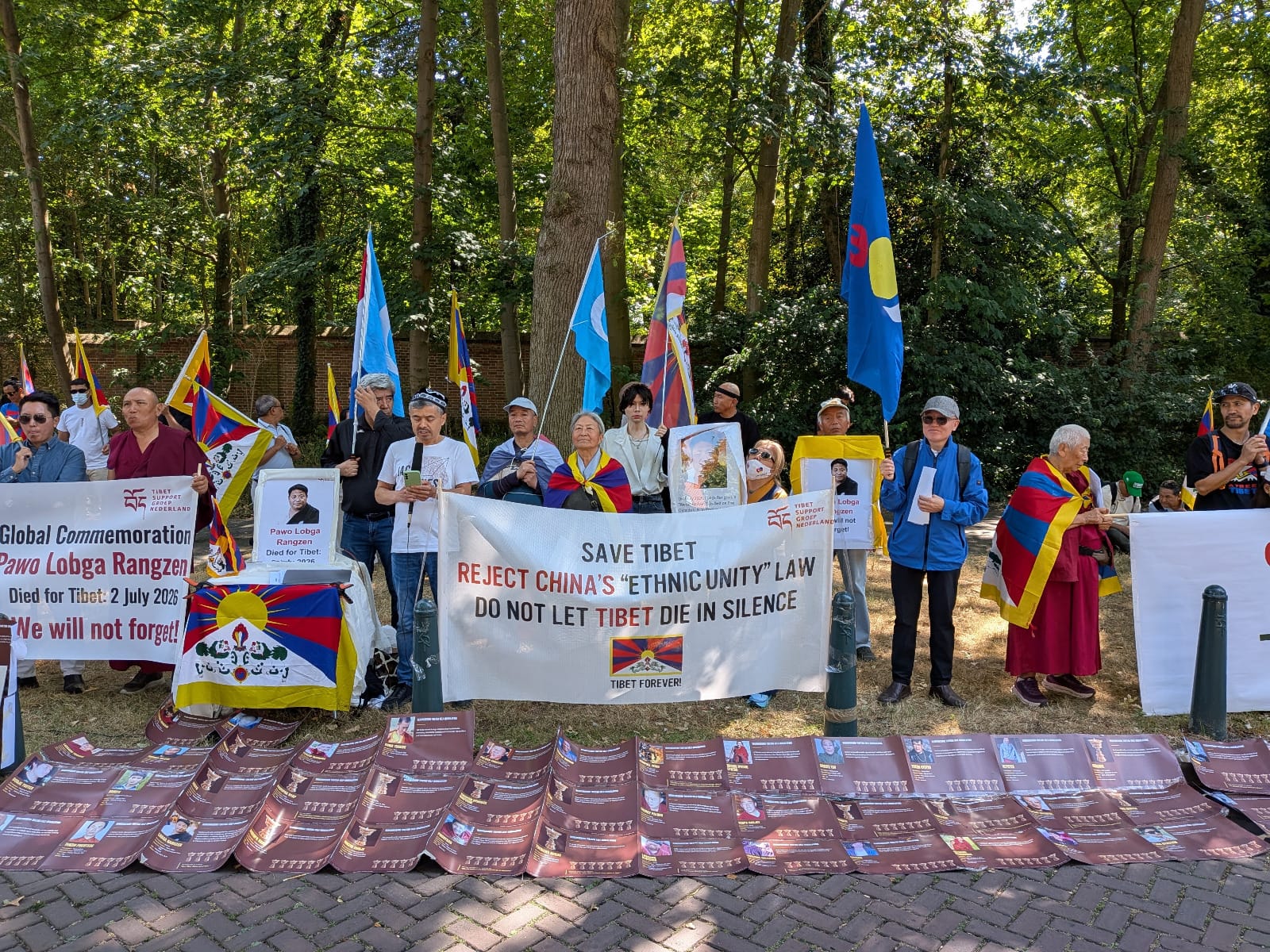
“Save Tibet — Reject China’s Ethnic Unity Law. Do not let Tibet die in silence.” On the pavement lie the portraits of Tibetans who have set themselves on fire since 2009.
Oppressed peoples side by side
Speakers from East Turkestan, Southern Mongolia, Hong Kong and Guangxi expressed their solidarity with the Tibetan people and firmly rejected the law. Alongside the Tibetan flags flew those of East Turkestan and Southern Mongolia. Together they called on the Chinese government to repeal the law immediately and to end its systematic attempts to erase the distinct identity of the peoples under its authority.
That common front is no coincidence. The policy that places Tibetan children in state boarding schools is the same policy that tears Uyghur families apart and drives the Mongolian language out of the classrooms of Inner Mongolia. The Ethnic Unity Law turns that practice into a legal obligation — for all these peoples at once.
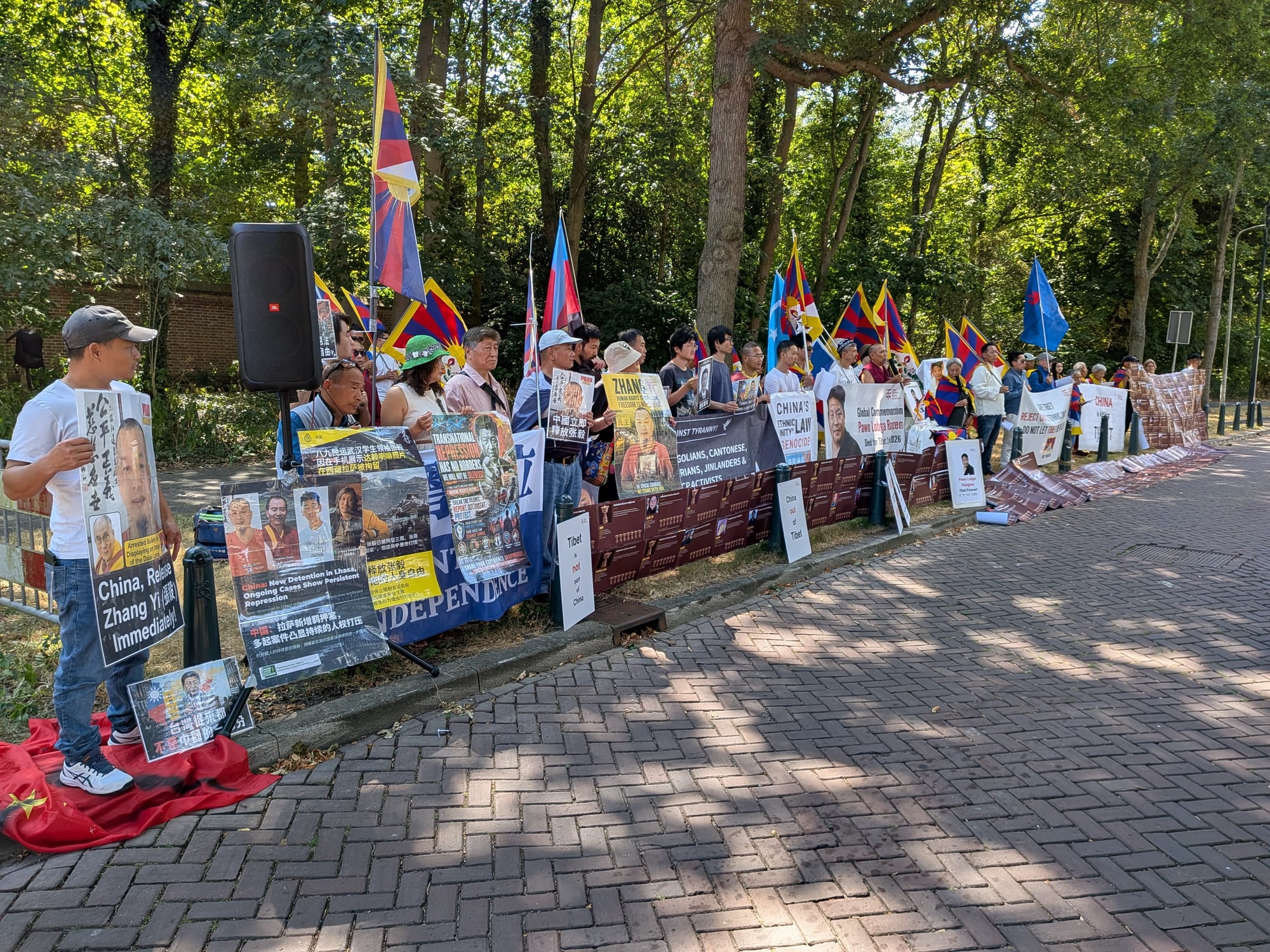
Placards and portraits lined the entire pavement in front of the embassy — among them calls for the release of imprisoned Tibetans and Chinese human rights defenders.
A global day of action
The Hague did not stand alone. At the call of Lobga Rangzen’s family, commemorations took place worldwide on 2 August. In New York, hundreds of Tibetans and supporters gathered for a day-long memorial, with a candlelight vigil moving towards the UN headquarters and a “die-in” representing the 171 Tibetans who have set themselves on fire since 2009, in Tibet and in exile. In Taipei, demonstrators lay down wrapped in Tibetan flags outside the offices of the Bank of China. He was also commemorated in Dharamsala and in Tibetan communities elsewhere in the world.
Carrying his message forward
Tsering Jampa stressed that the gathering was not only an act of remembrance, but also a renewed pledge to carry forward Lobga Rangzen’s message of unity, courage and freedom.
Tibet Support Group Netherlands calls on the Dutch government to publicly condemn the Law on the Promotion of Ethnic Unity and Progress, to name the forced assimilation of Tibetans, Uyghurs and Southern Mongolians for what it is, and to put this issue on the table within the EU and the United Nations. Fifty years of quiet diplomacy has brought Tibet nothing.
His sacrifice must not be forgotten. His message must not be ignored.
Tibet Support Group Netherlands works for the rights, culture, and political representation of the Tibetan people.
Sources
- Tibet Support Group Netherlands – Honour Pawo Lobga Rangzen: stand up for Tibet at the Chinese embassy
- Tibet Support Group Netherlands – Successful commemoration protest for Lobga Rangzen on Dam Square
- Tibet Support Group Netherlands – Lobga Rangzen: self-immolation outside the UN headquarters in New York
- Phayul – Hundreds rally in New York to honour Lobga Rangzen, renew calls for Tibetan independence
- Focus Taiwan – Tibet supporters rally in Taipei after activist self-immolation
- Amnesty International – Self-immolation of Tibetan man outside UN highlights long-standing Chinese repression
- Radio Free Asia – Tibetan activist dies after setting himself on fire outside UN headquarters
- International Campaign for Tibet – New PRC Ethnic Unity and Progress Law enforces assimilation of Tibetans